Writing at St Michael’s
Intent
At St Michael’s, we want every child to become a confident, capable and enthusiastic writer who can communicate their ideas clearly, creatively and effectively. Our writing curriculum develops the knowledge and skills children need to write for a range of purposes and audiences, fostering a love of writing and helping them recognise the value of their own ideas.
Children develop progressively in composition, vocabulary, spelling, punctuation, grammar, sentence structure and handwriting. We aim to equip every child with the skills and confidence to express themselves independently.
Our approach reflects our school vision, “Creating a community where we learn together through: respect, kindness, curiosity and faith.” Through writing, children explore ideas, consider different perspectives and learn to communicate thoughtfully, using their voices to inform, entertain, persuade and inspire.
Implementation
Writing is taught through a carefully sequenced curriculum from the Early Years Foundation Stage to Year 6. Teachers model effective writing, provide purposeful practice and enable children to apply their learning across a range of genres and subjects.
Composition and sentence structure
Children write for a variety of purposes and audiences, using high-quality texts to develop their vocabulary, creativity and understanding of effective writing.
Teachers model the writing process, supporting children to generate ideas, organise their thoughts, compose paragraphs and edit their work. Explicit sentence-level teaching develops secure sentence boundaries, a range of sentence types, varied openings and the effective use of conjunctions, clauses and punctuation. Children practise these skills through focused activities, shared writing and sentence challenges before applying them independently.
Spelling, punctuation and grammar
Spelling, punctuation and grammar are taught explicitly and progressively, with regular opportunities to practise and apply new knowledge. Children learn spelling patterns, develop strategies for unfamiliar words and explore how grammatical choices and punctuation affect meaning. Reading is closely linked to writing, exposing children to rich vocabulary, varied sentence structures and effective writing techniques.
Handwriting
Handwriting is taught progressively, in line with the Writing Framework, to develop accurate letter formation, fluency and automaticity.
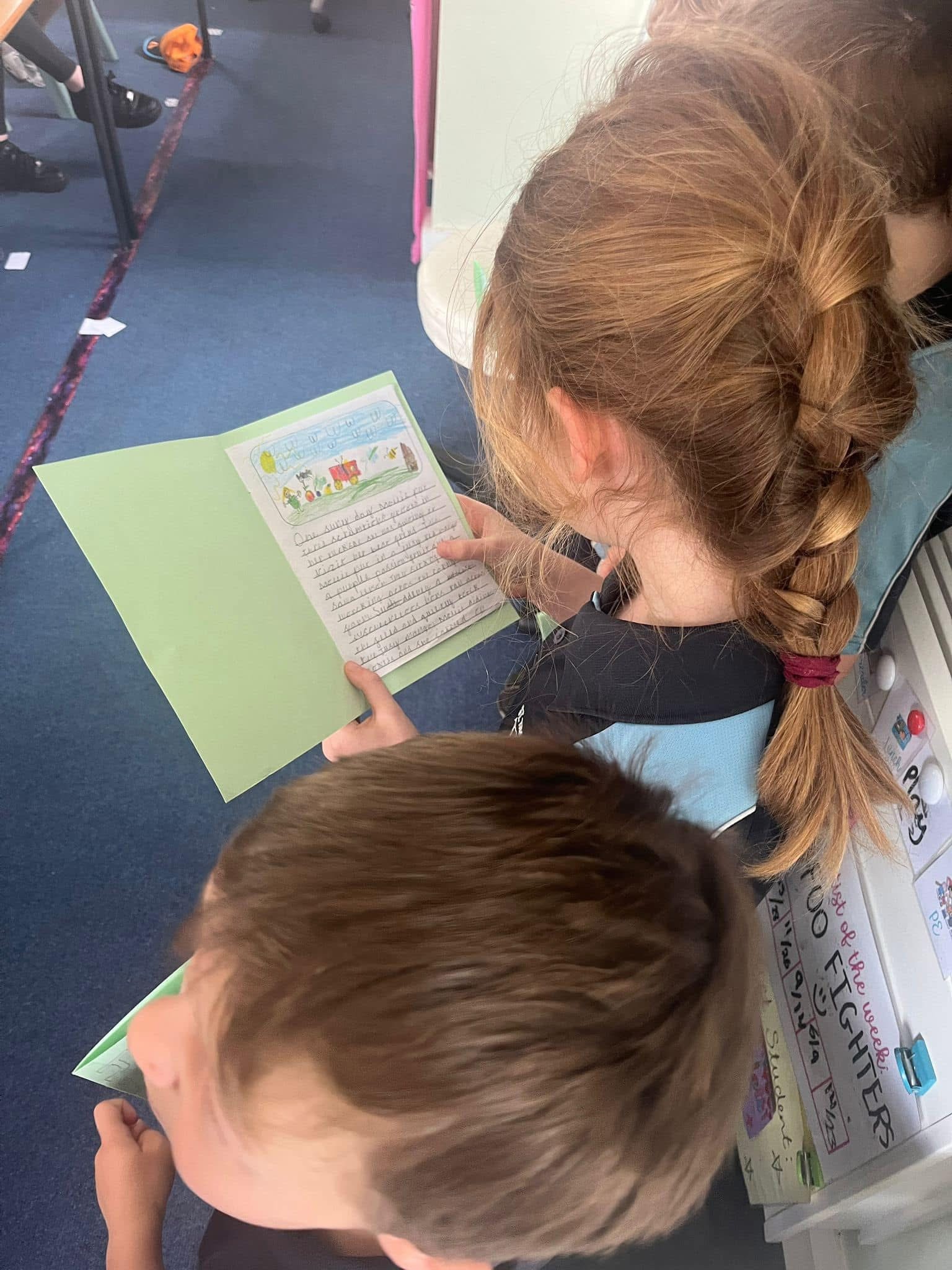
In the Early Years Foundation Stage, children develop fine motor control, pencil grip and early mark-making skills alongside correct letter formation. In Key Stage 1, teaching focuses on letter formation, consistent size, spacing and fluency. Children are introduced to joining when they have developed sufficient accuracy and control, with the aim of establishing fluent, legible cursive handwriting by the end of Year 2.
In Key Stage 2, children refine their handwriting to improve speed, consistency and fluency. Regular practice and teacher modelling support children to apply their skills across the curriculum, with additional support provided where needed.
Inclusion, feedback and assessment
Teachers use ongoing assessment to identify gaps in learning, adapt teaching and provide appropriate support and challenge. Children are taught to review, edit and improve their work using feedback and clear success criteria, developing increasing independence and responsibility for the quality of their writing.
Impact
Our curriculum aims to ensure that children leave St Michael’s as confident, independent writers who can communicate effectively and creatively. Children will:
-
Write for a range of purposes and audiences, adapting their language and style appropriately.
-
Develop ideas using rich vocabulary and varied sentence structures.
-
Apply spelling, punctuation and grammatical knowledge accurately.
-
Produce legible, fluent handwriting appropriate to their stage of development.
-
Edit and improve their work, responding to feedback and taking increasing responsibility for their learning.
-
Draw on their reading to strengthen their vocabulary and writing skills.
Progress is monitored through formative assessment, reviews of written work and summative assessments where appropriate. This informs teaching and supports continued curriculum development.
Ultimately, we want children to recognise that their words have value. Through writing, they develop curiosity, confidence and respect for others, learning to express their ideas and contribute positively to their community.