Geography at St Michael’s
Intent
At St Michael’s, our Geography curriculum inspires pupils to become curious, knowledgeable and explorative thinkers who understand the world around them. We aim to develop pupils’ geographical knowledge and skills, enabling them to question, observe, collect and interpret data, and draw informed conclusions about places and environments.
Through studying their locality and the wider world, children explore how physical and human geography interact and how places change over time. We encourage pupils to become respectful, resourceful citizens who appreciate the world’s diversity and understand their responsibility to care for and improve the environment.
Our curriculum reflects our school vision, “Creating a community where we learn together through: respect, kindness, curiosity and faith,” encouraging children to ask questions, consider different perspectives and develop respect for people and places around the world.
Implementation
Our Geography curriculum follows the National Curriculum and is organised around four key strands: locational knowledge, place knowledge, human and physical geography, and geographical skills and fieldwork. A clear progression of knowledge and skills ensures that learning builds progressively from EYFS to Year 6.
Following a spiral curriculum, key concepts, vocabulary and locational knowledge are revisited with increasing complexity, helping pupils secure and build upon prior learning. Enquiry questions underpin units, encouraging children to investigate geographical issues, analyse evidence and develop their own conclusions.
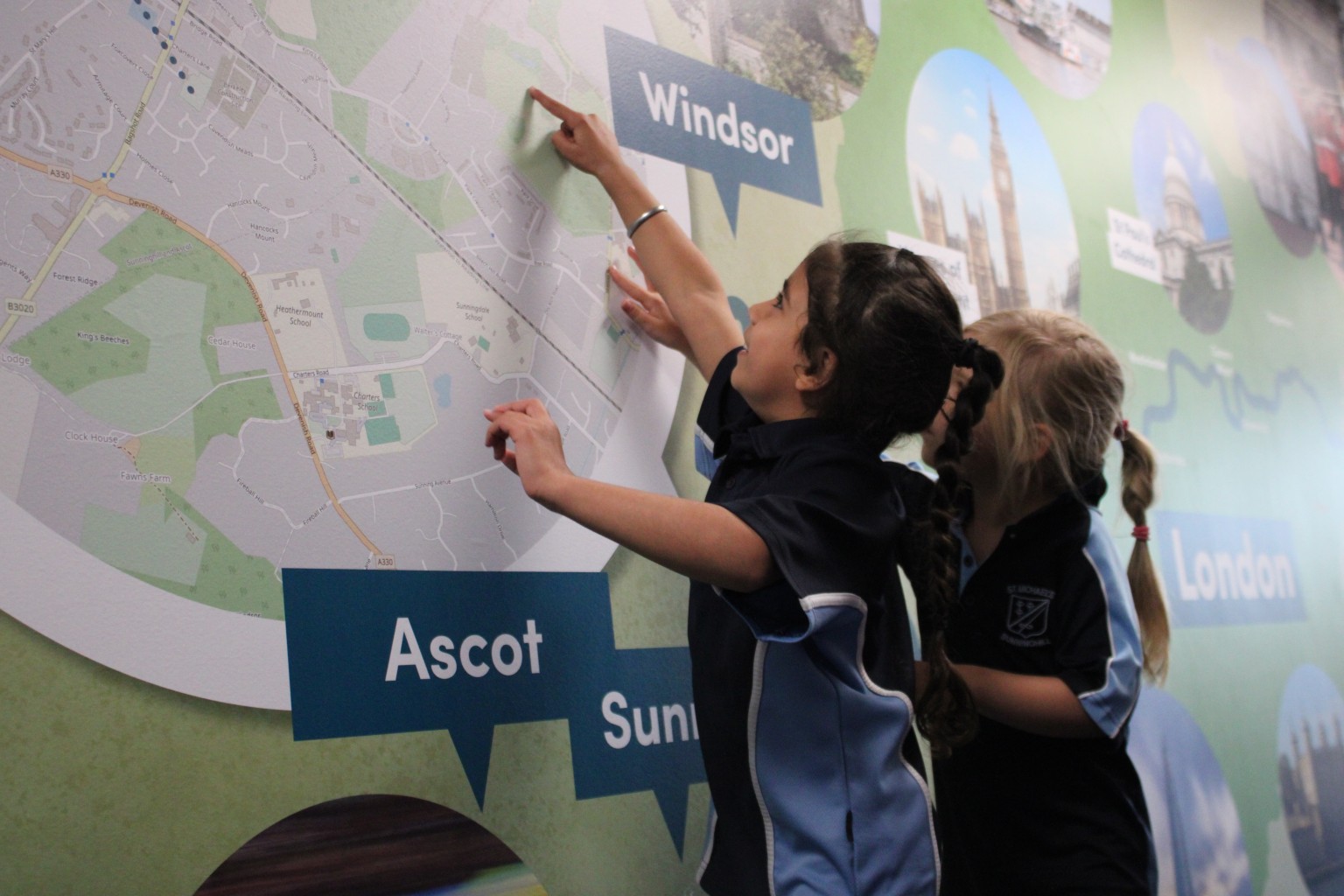
Fieldwork is embedded throughout the curriculum, from investigations within the school grounds to visits exploring physical and human features. Children learn to plan enquiries, observe and measure, record data and present their findings using a range of methods and technologies. Regular opportunities to investigate familiar places help pupils develop confidence in their geographical skills and make meaningful comparisons with other locations.
Lessons include a range of practical, collaborative, independent and digital activities. Cross-curricular links enable children to apply their geographical understanding across subjects. Teaching is adapted to meet pupils’ needs, providing appropriate support and challenge. Knowledge organisers support the recall of essential facts, concepts and vocabulary.
Impact
Our Geography curriculum aims to develop curious, confident geographers who can apply their knowledge and skills to understand the world and their place within it. Assessment takes place throughout each unit to identify understanding, address misconceptions and inform future teaching.
Teachers use questioning, lesson activities, knowledge catchers, unit quizzes, pupil voice and presentations of geographical enquiries to assess progress. Learning walks and book looks provide further evidence of curriculum impact. Assessment is recorded on OTrack at the end of the summer term, and pupils reflect on their learning and identify next steps at the end of units.
By the end of Year 6, pupils should be able to:
-
Locate and compare places in the UK and around the world, identifying similarities and differences in their human and physical features.
-
Explain key geographical processes, including the water cycle, climate, biomes and natural hazards, and understand how these shape places.
-
Understand how people interact with their environments, use natural resources and affect the world positively and negatively.
-
Use maps, atlases, globes, aerial photographs and digital mapping, applying appropriate geographical vocabulary, compass directions and grid references.
-
Understand key geographical concepts, including latitude, longitude, hemispheres, the tropics and time zones.
-
Plan and carry out geographical enquiries, collect and interpret data, present findings and draw evidence-based conclusions.
-
Meet the end-of-key-stage expectations of the National Curriculum and feel prepared to study Geography at Key Stage 3.
Ultimately, we want our pupils to leave St Michael’s with a lasting curiosity about the world, an appreciation of its diversity and an understanding of how they can contribute to a more sustainable future.
Geography at St. Michael's CE Primary School
-
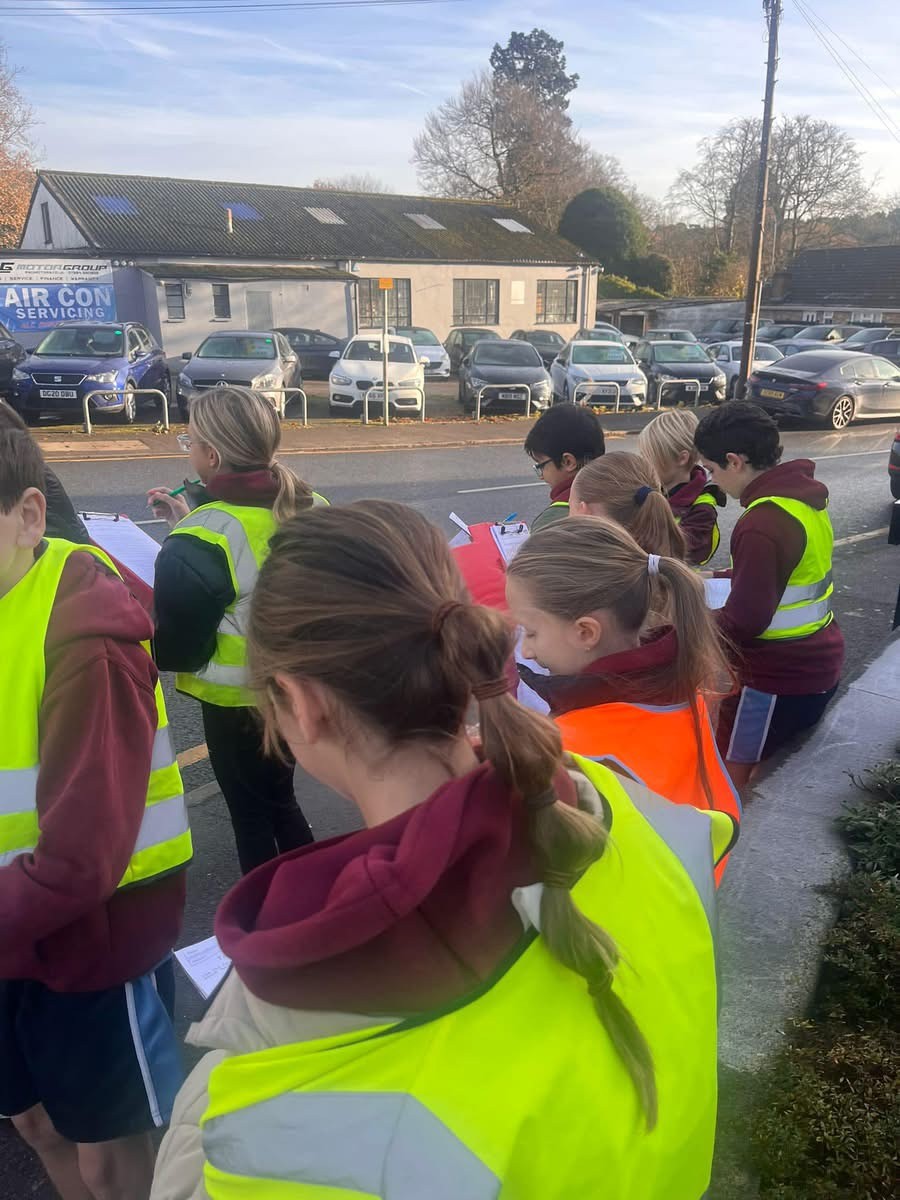
Y6 fieldwork in the village - pollution in the local area and surveying traffic and litter
-
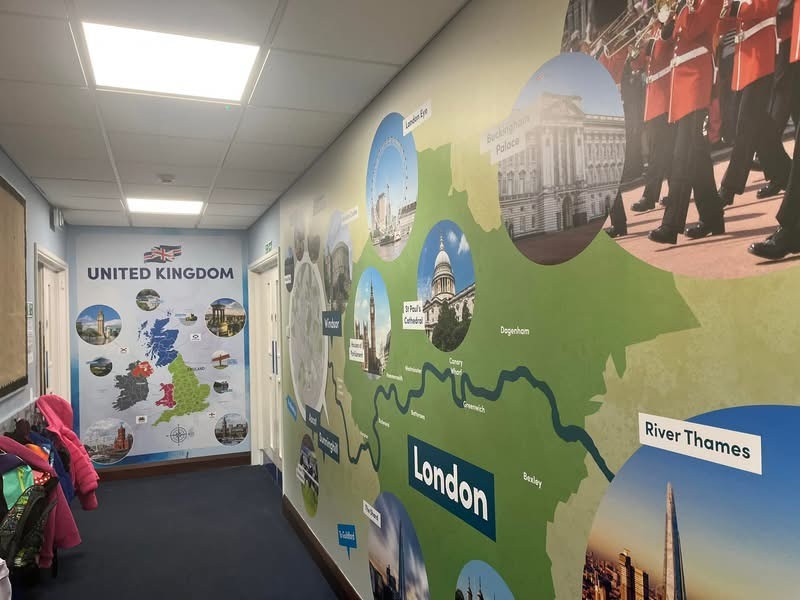
Geography wall art in the KS1 corridor
-
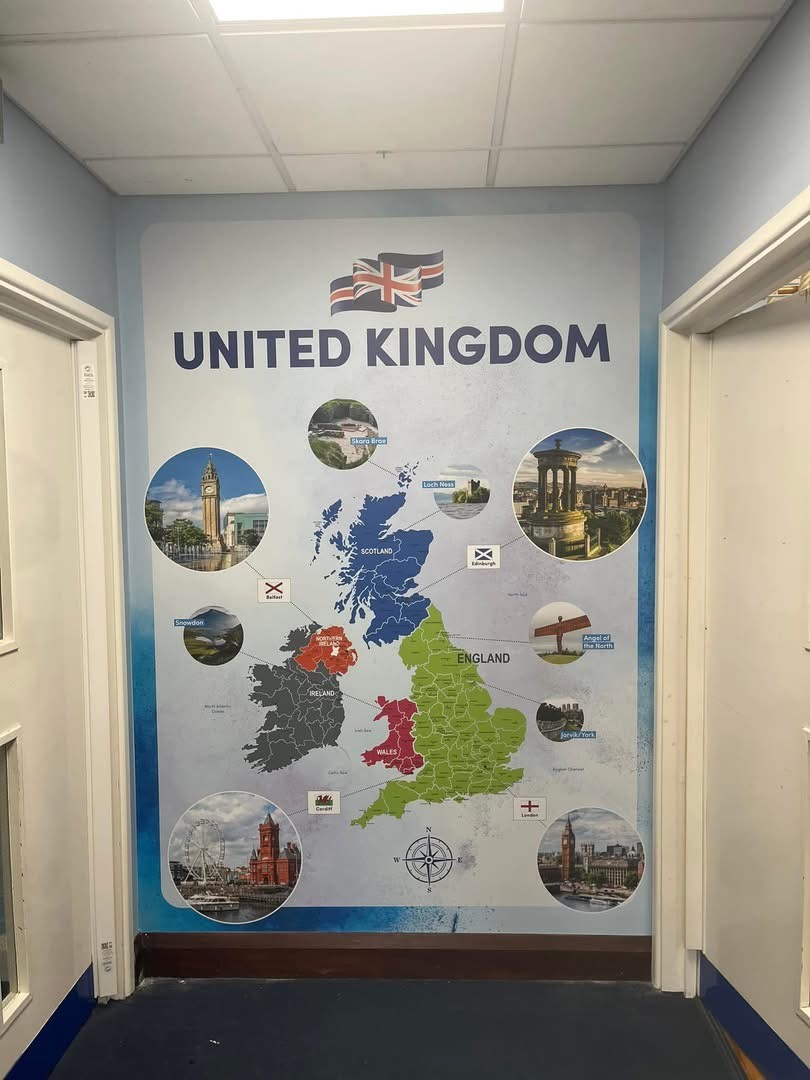
Geography wall art in the KS1 corridor