Maths at St Michael’s
Intent
At St Michael’s, we aim to make Mathematics engaging, enjoyable and meaningful, developing confident mathematicians who can reason, solve problems and apply their knowledge in everyday contexts. We want all children to develop a secure, deep understanding of mathematical concepts, building fluency and confidence as they progress through the curriculum.
Using White Rose Maths as the foundation of our curriculum, we follow a mastery approach that develops fluency, reasoning and problem-solving skills. We aim for every child, regardless of their starting point, to achieve their potential and develop a positive, lifelong relationship with Mathematics. Our curriculum encourages curiosity, resilience and a willingness to take risks, reflecting our school vision, “Creating a community where we learn together through: respect, kindness, curiosity and faith.”
Implementation
Our Mathematics curriculum follows the National Curriculum and is carefully sequenced from EYFS to Year 6, using the White Rose Maths long- and medium-term plans as a foundation. Teachers adapt the pace, models and resources to meet pupils’ needs, revisit prior learning and provide appropriate support and challenge.
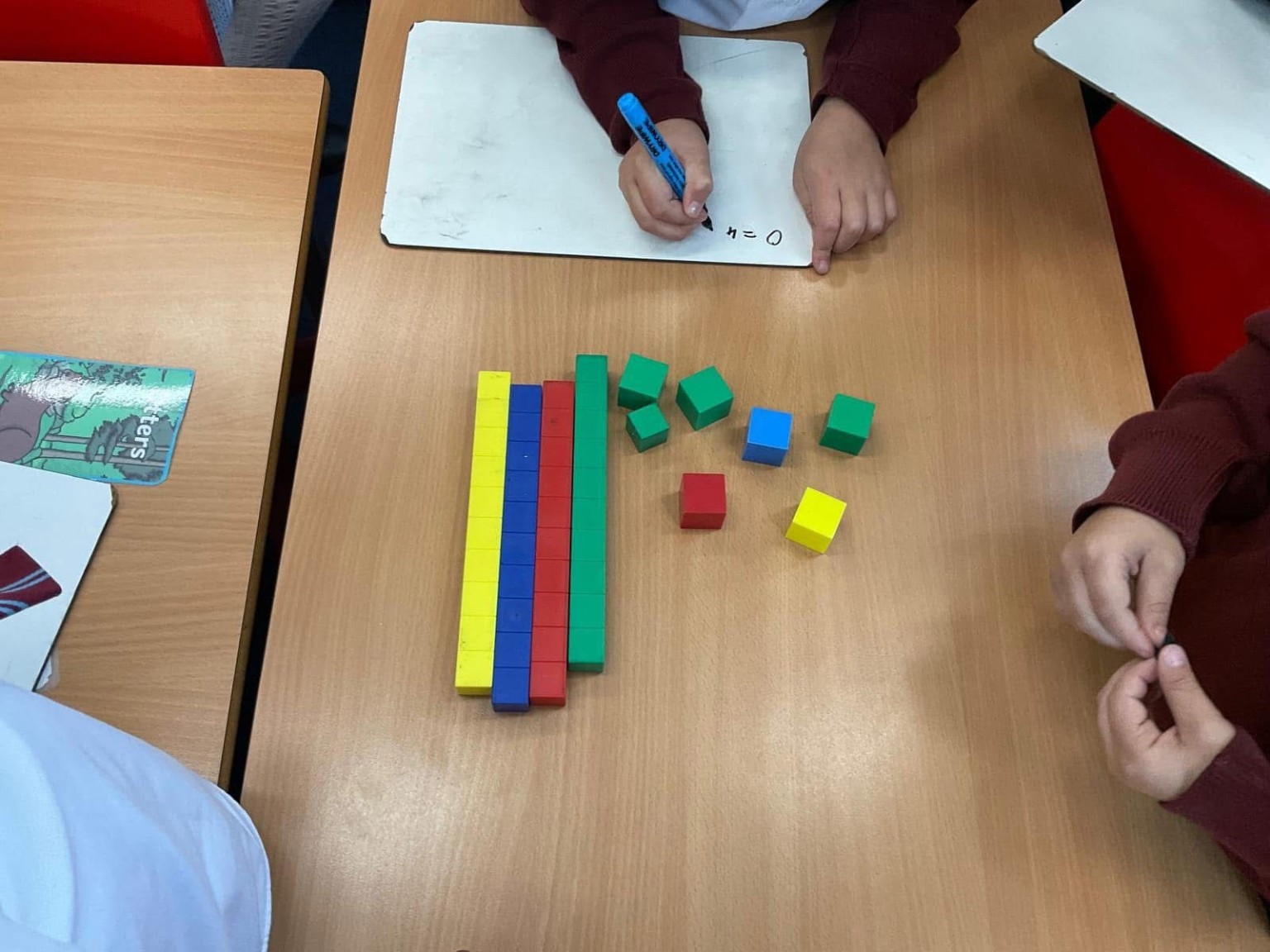
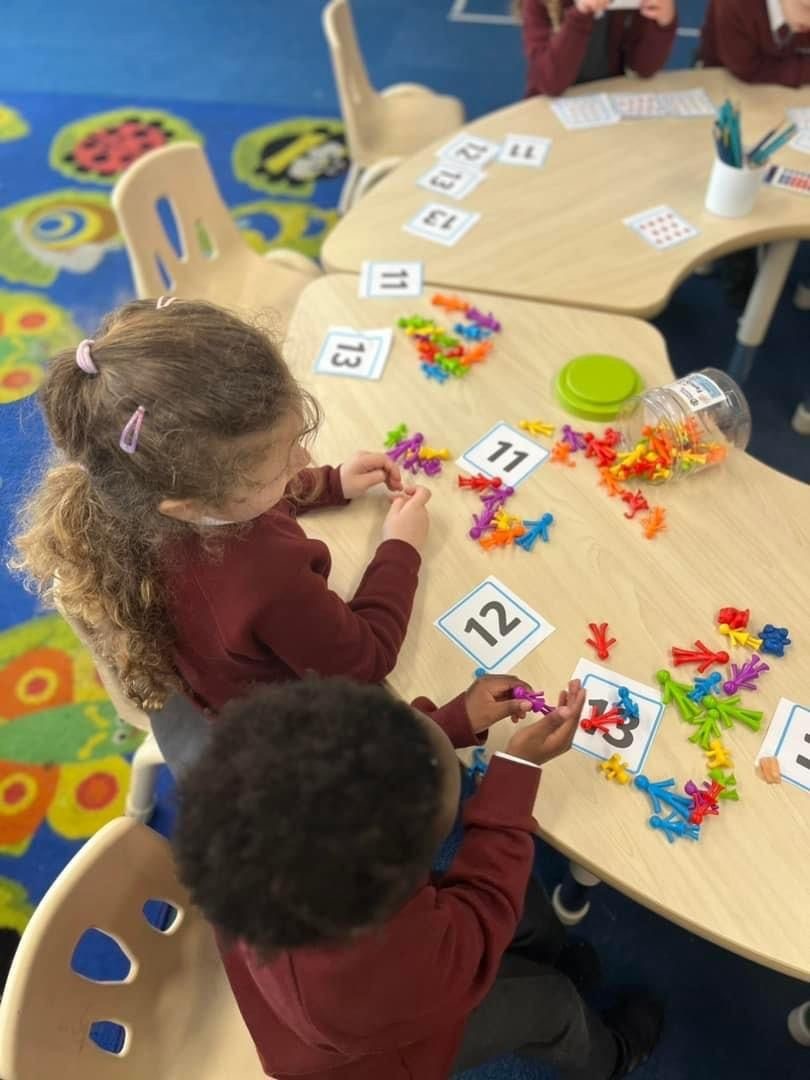
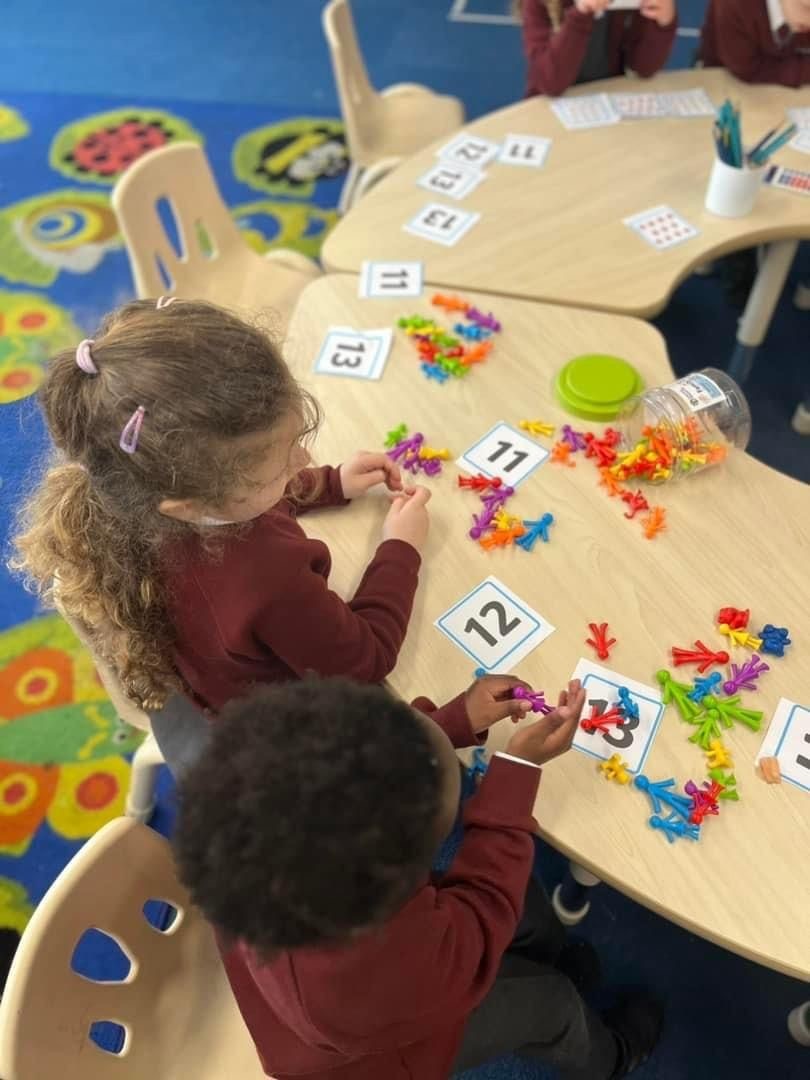
Teaching follows the concrete, pictorial and abstract (CPA) approach, enabling children to explore concepts using practical resources before progressing to visual representations and abstract calculations. Classroom resources, including Numicon, Base 10 and counters, support understanding, while Maths Working Walls reinforce current learning and key vocabulary.
Lessons develop the three aims of fluency, reasoning and problem-solving. Daily fluency practice reinforce key knowledge, and challenge activities extend pupils’ understanding. In Key Stage 1, White Rose Fluency Bee supports the development of foundational number skills. Teachers also draw on additional resources, including NRICH, to provide opportunities for deeper thinking and mathematical investigation.
Homework reinforces classroom learning through White Rose resources and practice journals. Children in Years 1–3 use NumBots to develop addition and subtraction fluency, while Times Tables Rock Stars supports multiplication recall from Year 2 onwards.
Assessment and feedback
Ongoing formative assessment, questioning and feedback inform teaching and identify children who need additional support or further challenge. Targeted interventions are provided where necessary and monitored to evaluate their impact.
White Rose assessments are used in Years 1–5, while Year 6 pupils practise using past SATs papers. Assessment outcomes inform future planning and teacher judgements, which are recorded on OTrack. Pupils in Year 4 also complete the statutory Multiplication Tables Check.
Impact
Our Mathematics curriculum aims to ensure that children leave St Michael’s as confident, resilient mathematicians who understand key concepts and can apply their knowledge independently. We want pupils to approach mathematical challenges with curiosity, reason logically and recognise the relevance of Mathematics in everyday life and across the wider curriculum.
By the end of Year 6, pupils should be able to:
-
Demonstrate fluency in key mathematical facts, methods and procedures.
-
Apply their knowledge to solve problems in a range of contexts.
-
Explain their reasoning, justify their answers and use mathematical vocabulary accurately.
-
Make connections between mathematical concepts and select appropriate strategies and representations.
-
Approach challenges with resilience, confidence and a willingness to learn from mistakes.
The impact of our curriculum is monitored through:
-
Pupil and teacher voice: discussions and feedback about teaching, learning and pupils’ confidence in Mathematics.
-
Assessment and outcomes: termly assessments, statutory assessments and teacher judgements recorded on OTrack.
-
Learning walks and drop-ins: monitoring teaching approaches, progression and opportunities for support and challenge.
-
Book looks: reviewing pupils’ work to evaluate progress, consistency and depth of understanding.
Through this approach, we aim to ensure that every child develops the mathematical knowledge, skills and confidence needed for the next stage of their education and beyond.
Maths at St. Michael's CE Primary School
-
-
-
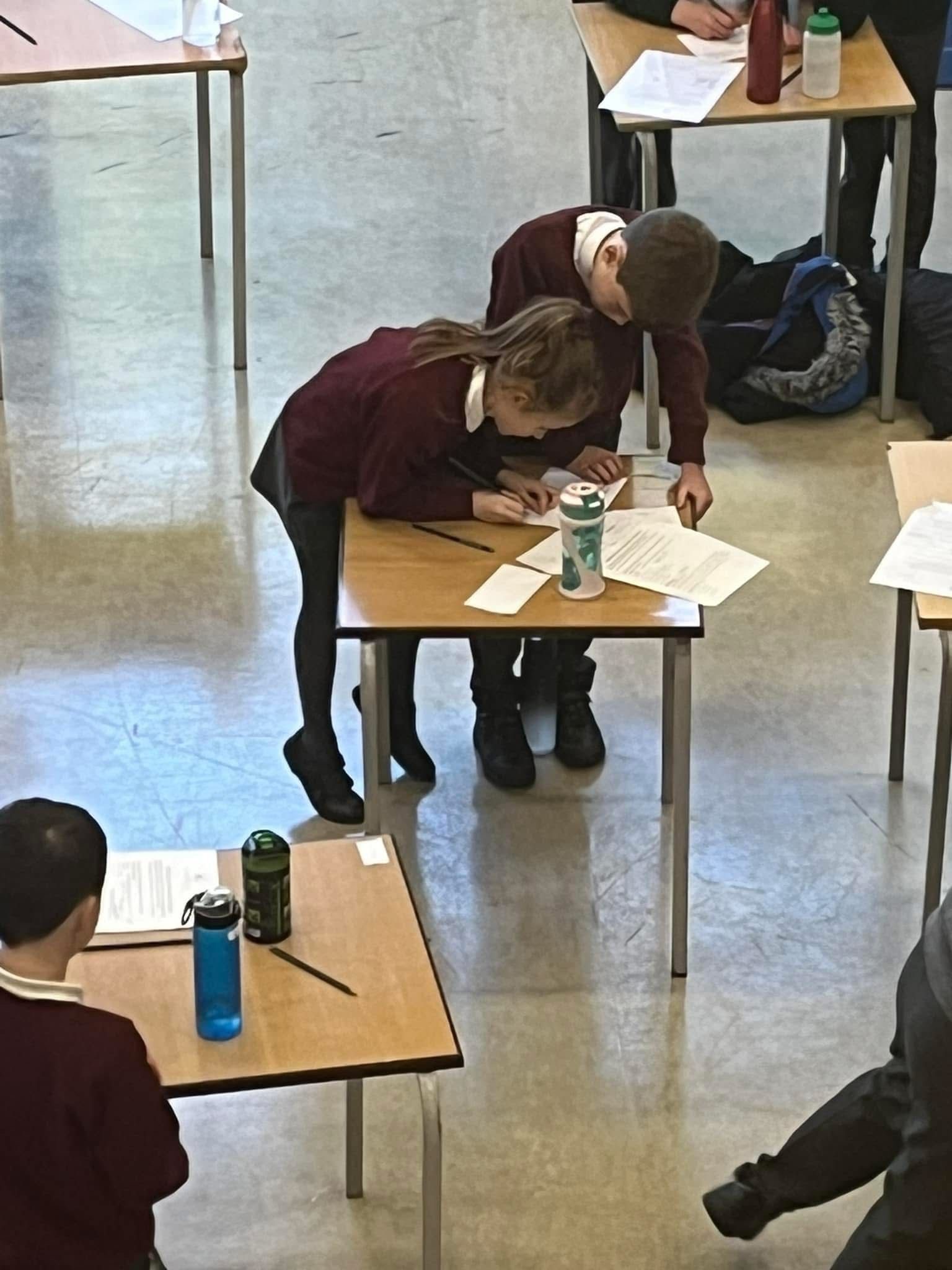
Maths competition at Lambrook School
-